

15% more power late in a two-hour session.
+15%LATE-SESSION POWER+15% SUSTAINABLE TRAINING LOAD IN WEEK 3
Two sessions a day, six days a week. The classic overreaching markers showed up in control. Largely not with VKE.
Cart
Your cart is empty
Focus. Energy. Recovery.
Direct cycling research with Veech Ketone Ester has measured more power, greater mitochondrial adaptation, stronger performance late in hard efforts, and better recovery from the work.
Build more power and more mitochondrial adaptation from the training you're already doing.
Support fuel, power and focus when fatigue starts taking something away.
Support recovery and sleep when today's ride is followed by another one.
~90% of the extra night wakefulness caused by a hard training day was reversed. Sleep research →
Three human cycling trials measured performance on the day. What they share is the shape of the effort — long, or late, or both.
FARTHER IN A 30-MINUTE TIME TRIAL
Elite athletes riding with VKE and carbohydrate covered roughly 2% more distance after an hour of steady work. In a 30-minute time trial, that's a gap.
COX ET AL. 2016 · CELL METABOLISM · PMID 27475046
IN WORLDTOUR RIDERS · 389 W VS 378 W
Mean power in the opening 8-minute effort of a stage simulation, in 28 WorldTour cyclists. Sodium bicarbonate was part of the protocol; the second 8-minute effort did not differ.
IJSNEM 2024;34(1) · PMID 37751902
MEAN POWER AFTER THREE HOURS OF RACING
Five percent when you're fresh is interesting. Five percent at the end of a three-hour race simulation is the part that matters. VKE with bicarbonate produced it; neither alone did.
POFFÉ ET AL. 2021 · MSSE · PMID 32735112
More fuel and measured performance in the right protocols.
More power and more mitochondrial adaptation from the block.
Support the ability to absorb the work and come back again.
Preserve cognitive performance when fatigue starts taking something away.
Cyclists spend thousands chasing a few watts.
Veech Ketone Ester has measured them in human trials.
That's why Veech Ketone Ester shows up in professional cycling.
Twenty-eight trained males, eight weeks of supervised cycling. Half took 25g of Veech Ketone Ester immediately after every session and again before sleep. Half took an isocaloric placebo. The VKE was used after training and before sleep, not as an immediate pre-test dose.
30-MINUTE TT POWER
302 W against 291 W at post-test.
VO2PEAK, AGAINST +6% IN CONTROL
Twice the improvement from the same training.
CITRATE SYNTHASE
A direct marker of mitochondrial content.
OXPHOS COMPLEX II
Increased with VKE, unchanged in control.
Eleven watts after eight weeks — and they didn't take it
before the test. They trained with it, after the work
and before sleep.
This is the result that changes VKE from a race-day product into a training tool.
The riders built the advantage before test day.
More watts was the output. The muscle adaptation underneath included higher citrate synthase, more OXPHOS complex II, and — in the overload studies — signs of improved oxygen-delivery capacity: capillary contacts per fibre up 44%, exchange index up 42%, serum EPO up about 25%.
The muscle itself kept adapting. More capillary contact. Higher EPO signalling. More mitochondrial machinery.
The point isn't just fuel in the bottle. It's what repeated Veech Ketone Ester use may allow the body to build — an exogenous substrate used to support ATP-generating metabolism.
ROBBERECHTS ET AL. 2026 · JOURNAL OF PHYSIOLOGY · PMID 41757674 · PUBMED
8 weeks changed the result.READY TO RUN THE BLOCK?
SHOP VKETwo sessions a day, six days a week. The classic overreaching markers showed up in control. Largely not with VKE.
Muscle biopsies before and after. A shorter oxygen delivery distance into working muscle — structural adaptation, not a same-day effect.
D-BHB is oxidized through the mitochondria to produce ATP — the energy every pedal stroke ultimately spends. More machinery to run that process is the thing a training block is supposed to build.
Across the cycling trials, riders training with VKE built more of the machinery that produces it.
CITRATE SYNTHASE
OXPHOS COMPLEX II
CAPILLARY CONTACTS
EXCHANGE INDEX
SERUM EPO
The trials measured mitochondrial and capillary adaptation — the machinery. They did not measure an acute rise in ATP itself.
ROBBERECHTS 2026 · PMID 41757674 · POFFÉ 2023 · PMID 37062892
Five hours in, the legs aren't the only thing tired. Holding a wheel. Reading a corner on a fast descent. Timing a feed. Deciding whether to follow a move. All of it is reaction and judgement under fatigue — and all of it degrades before you notice.
Fatigue can erode judgement and reaction while you still have power left. In the mental-fatigue trial, VKE alone primarily prevented the decline seen with placebo. VKE with caffeine produced the largest effects measured — roughly a tenth of a second quicker on a task-switching test.
The bigger story is preserving decision-making when fatigue would normally start taking something away.
In a separate ultra-endurance study — running, not cycling — VKE maintained mental alertness and roughly doubled circulating dopamine across a 60–100km effort.

Mark Cavendish. 35 Tour de France stage wins — the most in history. He's a sprinter, and a mountain stage is not where a sprinter is supposed to be comfortable.
He crossed the line utterly depleted, having barely made the cutoff. Before the bike was out of his hands, the only thing on his mind was:
“Where's my ketones?”
WHEN TOMORROW IS ANOTHER TOUR STAGE,
RECOVERY STARTS AT THE FINISH LINE.
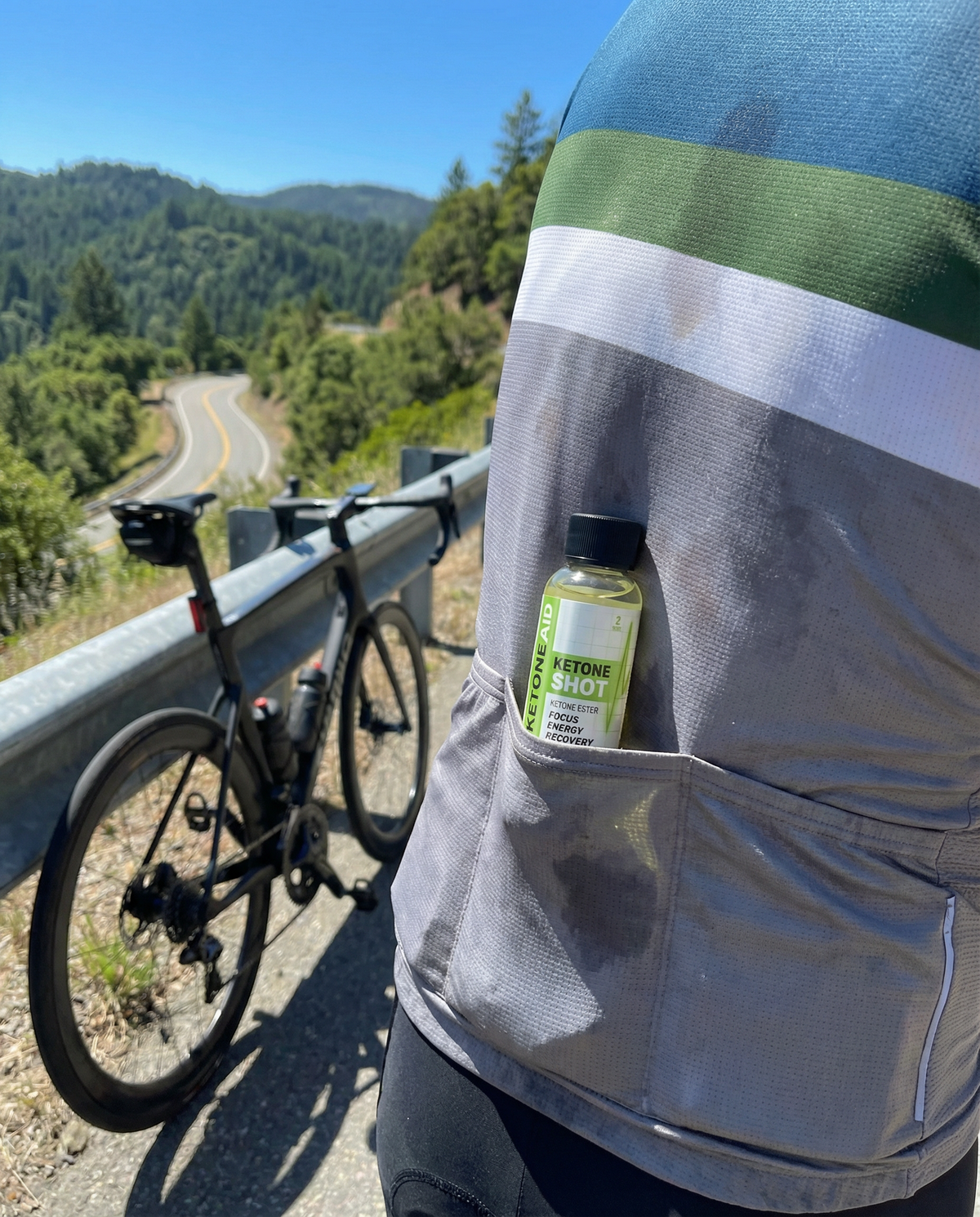
I am a 65 year old cyclist and this is absolutely amazing!! It increases focus which is a big part of performance, but on longer climbs and rides, I feel fresher and have power and energy in reserve. I also noticed that my legs need less recovery time. Substantially less.— TONY GILLILAND
This is a very good product for cycling, with very good results for a long day race, it also help me to increase my vo2 max, very good for recovery after a race and also very good recovery for next day race…— DARIEN
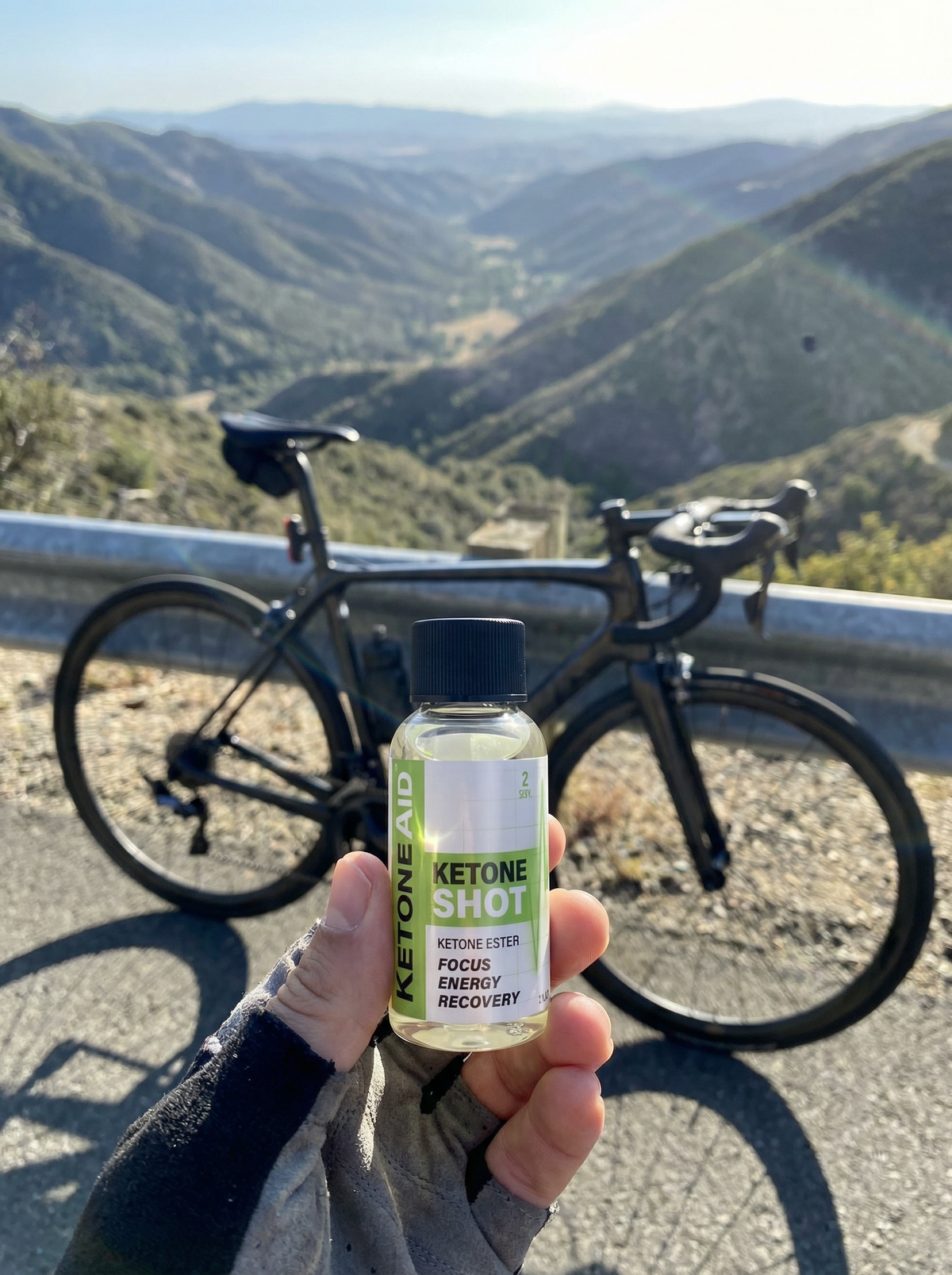
Used for 70.3. Kept me constant, didn't run low on energy, combined with carbs.— S C., HALF IRONMAN
KetoneAid is more potent than any other product I've tried in the category… by far the best effect is increased endurance.— ISABELLE RUNOLFSDOTTIR
Product works once you figure out good dosage, great recovery when racing multiple motos.— BROOKS FAHEY
Four practical strategies — not one prescription. The laboratory protocols used large amounts under supervision and aren't our consumer instructions.
Why results differ. Duration, timing, dose, fueling state, blood ketone level, acid-base conditions and the athlete's underlying metabolic context all change the question a study is asking. A short, high-intensity protocol produced a different result from the longer-duration and training-block studies.
Proper results depend on proper use. A study protocol is not automatically a race-day recommendation. Test the protocol you intend to use in training. Full results, protocols and citations are in the research section below.
Best supported by direct cycling evidence. VKE through a 6–8 week block, around post-training recovery and before sleep.
RESEARCH SUPPORT: ROBBERECHTS 2026. DO NOT COPY THE RESEARCH DOSE.
The strongest acute data used VKE with carbohydrate, not instead of it. Ketones don't replace carbs here — they're another fuel source.
Test exact timing and amount in training before racing with it.
Use VKE through the training and recovery build into race week. For a short race, the adaptation you already earned is worth more than a new race-day variable.
PRACTICAL COACHING STRATEGY — NOT A DIRECTLY TESTED ONE-WEEK STUDY.
Most elite road racing is still built around carbohydrate because carbohydrate is an efficient, readily available fuel for high-output work.
A fully fat-adapted athlete is a different metabolic case. Greater reliance on fat and ketones may change where VKE fits, but the major cycling trials on this page were not designed around that population.
Questions about your event or protocol?
Tell us the event, duration, training phase and what you're trying to solve. We'll point you toward the relevant research and protocol.

Every cycling study on this page used the Veech Ketone Ester. That matters more than the word “ketone” on a label.
R 1,3 butanediol, ketone salts, D-BHB free acid, mixtures of D-BHB and R 1,3 butanediol, and other ketone esters are different molecules or formulations. They should not be treated as interchangeable.
Other “ketone” brands often cite Veech Ketone Ester results — then sell you something else. These alternatives have generally produced null or negative outcomes. Don't get duped. Get KetoneAid.
EXAMPLES IN OUR RESEARCH INDEX: RACEMIC 1,3-BUTANEDIOL, BLOOD D-BHB 0.44–0.79 mM WITH GI SYMPTOMS IN 5 OF 9 (SHAW 2019) · 1,3-BUTANEDIOL WITH CARBOHYDRATE, NO TIME-TRIAL IMPROVEMENT (CARPENTER 2026, PMID 42514457) · ACETOACETATE DIESTER, ABOUT 2% SLOWER WITH SEVERE GI DISTRESS (LECKEY 2017, PMID 29109686) · KETONE SALTS 1.0 mM AGAINST THE ESTER'S 2.8 mM AT A MATCHED DOSE (STUBBS 2017, PMID 29163194)
The strongest cycling result on this page came from repeated use over eight weeks — after training and before sleep. Buy enough to actually run the block.
Positive, null and negative. Every one of these was done in cyclists, and every one shaped the protocol section above.
Eight weeks of training with it: +4% time-trial power and greater mitochondrial adaptation.
Robberechts et al. 2026 · Journal of Physiology
28 trained males · 14 per group · PMID 41757674
PROTOCOL KU Leuven. Twenty-eight trained males completed eight weeks of supervised cycling training. Fourteen received 25g of the ketone monoester immediately after each session and again before sleep; fourteen received an isocaloric placebo.
CONTEXT: Trained males only, 14 per group, supervised laboratory programme rather than self-directed training. PMID 41757674, doi 10.1113/JP290315 — PubMed
Elite athletes: about 2% further — roughly 411 meters — in a 30-minute time trial.
Cox et al. 2016 · Cell Metabolism · University of Oxford
Ester taken with carbohydrate · PMID 27475046
PROTOCOL Athletes completed a 30-minute time trial after 60 minutes at 75% of peak power, having ingested the Veech Ketone Ester alongside carbohydrate.
CONTEXT: Small elite sample under laboratory conditions, and later work has not always reproduced it in different protocols — which is the argument of this page rather than an objection to it. PMID 27475046 — PubMed
WorldTour professionals: 389 W against 378 W in the opening 8-minute effort.
IJSNEM 2024;34(1) · 28 WorldTour cyclists
Monoester with sodium bicarbonate · PMID 37751902
PROTOCOL Twenty-eight WorldTour cyclists, randomized, receiving 800mg per kg of ketone monoester or placebo with 210mg per kg of sodium bicarbonate. A road-cycling stage simulation: an 8-minute time trial, a 30-second time trial, 4.5 hours of outdoor cycling, then a second 8-minute and second 30-second time trial.
CONTEXT: The benefit appeared in the first 8-minute effort. The later repeated efforts did not show the same improvement, and sodium bicarbonate was part of the tested protocol in both conditions. PMID 37751902, doi 10.1123/ijsnem.2023-0078 — PubMed
End of a 3-hour race simulation: 5% higher mean power — but only with bicarbonate.
Poffé et al. 2021 · MSSE 53(2):431–441
9 well-trained cyclists · four conditions · PMID 32735112
PROTOCOL Double-blind randomized crossover. Nine well-trained male cyclists completed a 3-hour intermittent simulated race, a 15-minute time trial and an all-out sprint, taking 60g of carbohydrate per hour throughout. Four conditions: placebo, ketone ester, bicarbonate, or ketone ester plus bicarbonate.
CONTEXT: Nine trained male cyclists. Bicarbonate supplementation has its own dosing and tolerance considerations and is not part of our standard recommendation. PMID 32735112 — PubMed
Three-week overload: 15% more late-session power and 15% more sustainable load.
Poffé et al. 2019 · Journal of Physiology
18 fit males · two sessions daily · PMID 31039280
PROTOCOL Three weeks of deliberately excessive cycling designed to induce non-functional overreaching. Nine received a ketone ester after each session and before sleep; nine received a control drink.
CONTEXT: Nine per group, fit males, an overload model built to cause overreaching rather than a normal programme. The difference in energy balance between groups may explain part of the effect. PMID 31039280, doi 10.1113/JP277831 — PubMed
Overload block: capillary contacts up 44%, EPO up about 25%.
Poffé et al. 2023 · Journal of Physiology
18 fit males · muscle biopsies · PMID 37062892
PROTOCOL Eighteen healthy fit males, three weeks of endurance overload at ten sessions per week. Nine received 25g of ketone ester immediately after each session and 30 minutes before sleep; nine received an isocaloric control. Vastus lateralis biopsies before and after.
CONTEXT: Nine per group, fit males, three weeks of deliberate overload. These are measures of muscle capillarisation and circulating EPO, not clinical outcomes, and not comparable to administered erythropoietin. PMID 37062892, doi 10.1113/JP284346 — PubMed
After a hard training day: improved sleep efficiency and most of the extra wakefulness reversed.
Robberechts et al. 2023 · MSSE
10 trained cyclists · polysomnography · PMID 37259248
PROTOCOL Ten trained cyclists completed morning endurance work and evening HIIT ending one hour before bedtime. They received 25g of VKE after exercise and a further 25g thirty minutes before bed, or placebo. Sleep was measured with polysomnography.
CONTEXT: Ten trained cyclists and a deliberately disruptive exercise protocol. The research doses were larger than we recommend for everyday use. VKE is a food, not a sleep aid. PMID 37259248 — PubMed
Short flat-out effort: mean power about 1.5% lower in the ketone conditions.
Poffé, Wyns et al. 2021 · MSSE 53(5):1068–1078
Well-trained cyclists · with and without bicarbonate · PMID 33196605
PROTOCOL A 60-minute warm-up at low-to-moderate intensity including several harder efforts, then a 30-minute simulated time trial and an all-out sprint, under placebo, ketone ester, bicarbonate, or both.
CONTEXT: Well-trained male cyclists. Read alongside the 3-hour study rather than instead of it. PMID 33196605 — PubMed
Eight-day stage-race simulation: no improvement in performance, cognition or sleep.
Robberechts et al. · 18 well-trained cyclists
Double-blind, placebo-controlled, parallel · PMID 42658808
PROTOCOL Eighteen well-trained cyclists completed a simulated eight-day cycling stage race in a double-blind, placebo-controlled parallel trial, testing whether ketone monoester supplementation affected physiological strain, mental fatigue, exercise performance and sleep.
CONTEXT: Eighteen well-trained cyclists, parallel design rather than crossover. Included because a page arguing that protocol decides the outcome has to show the protocols that didn't work. PMID 42658808 — PubMed
Yes — but not every cycling protocol produces the same result.
Positive acute cycling trials include about 411 meters more distance in a 30-minute time trial after an hour of steady work, 389 W against 378 W in the opening effort of a WorldTour stage simulation, and 5% higher mean power at the end of a 3-hour race simulation when bicarbonate was taken alongside.
Across eight weeks of training with it, time-trial power was 4% higher and VO2peak rose 12% against 6% in control. Through a three-week overload block, riders held 15% more late-session power and absorbed 15% more training load.
In a 30-minute flat-out time trial, power was about 1.5% lower. That's why this page is organised around protocol rather than a single number.
That depends on what part of performance you're trying to improve.
People searching for “cycling supplements” or an “energy supplement for cycling” may be trying to solve very different problems — immediate fuel, long-duration endurance, focus, training adaptation or recovery.
Veech Ketone Ester is a food, not a dietary supplement. It provides D-BHB directly as another oxidizable fuel rather than simply adding more carbohydrate or acting as a stimulant.
What makes VKE especially relevant to cyclists is the direct human evidence: prolonged-effort performance, late-session output, training adaptation and recovery have all been studied in cyclists.
It also does not work identically in every protocol. Duration, timing, amount, carbohydrate context and the athlete's metabolic state matter. For VKE, how you use it is part of whether it works.
There can be more than one reason: pacing, heat, hydration, available fuel, accumulated muscular fatigue and the simple cost of doing hard work for hours.
That late-effort problem is also where some of the VKE cycling research gets interesting.
In one three-hour race simulation, VKE with bicarbonate produced 5% higher mean power at the end. During a three-week overload block, riders using VKE held 15% more late-session power and sustained 15% more training load.
That does not mean VKE fixes every bad ride or replaces a sound race strategy. It means the evidence is especially relevant when the question is what happens after the work starts stacking up.
For VKE, recovery may be as important as race-day fueling.
Some of the strongest cycling evidence comes from repeated use around demanding training rather than a single pre-ride dose. Across eight weeks, cyclists taking VKE after training and before sleep developed greater endurance adaptation and finished with higher time-trial power. Other cycling research found better late-session output during overload training and improved sleep after a deliberately hard training day.
That is why we think about VKE as part of a training-and-recovery protocol, not just something to take at the start line.
It depends what you're trying to solve.
The research covers three different timings: during or around prolonged race protocols, immediately post-exercise, and before sleep. The adaptation and recovery studies — the strongest evidence here — used post-exercise and pre-sleep dosing.
No — but “replacement” is the wrong frame.
Carbohydrate is the traditional fuel for high-output road cycling. Veech Ketone Ester gives the body D-BHB directly, adding another oxidizable fuel through a different metabolic pathway.
That distinction matters because the result depends on how VKE is used. Some of the strongest acute cycling results were produced with carbohydrate already onboard, while other protocols produced different results under different fuel, timing and acid-base conditions.
The useful question is not simply “carbs or ketones?” It is what you're trying to accomplish, what kind of effort you're doing, and how VKE is incorporated into the protocol.
Because the protocols differ: event duration, amount, timing, carbohydrate context, acid-base effects, baseline metabolic state and athlete population.
Proper results depend on proper use.
Some studies are designed to isolate a specific question rather than replicate how an athlete would use VKE in practice. A study protocol is not automatically a race-day template.
Use the protocol that matches your event, test it in training, and adjust it to what works for you.
Questions? Ask in the chat or text 703-829-9411.
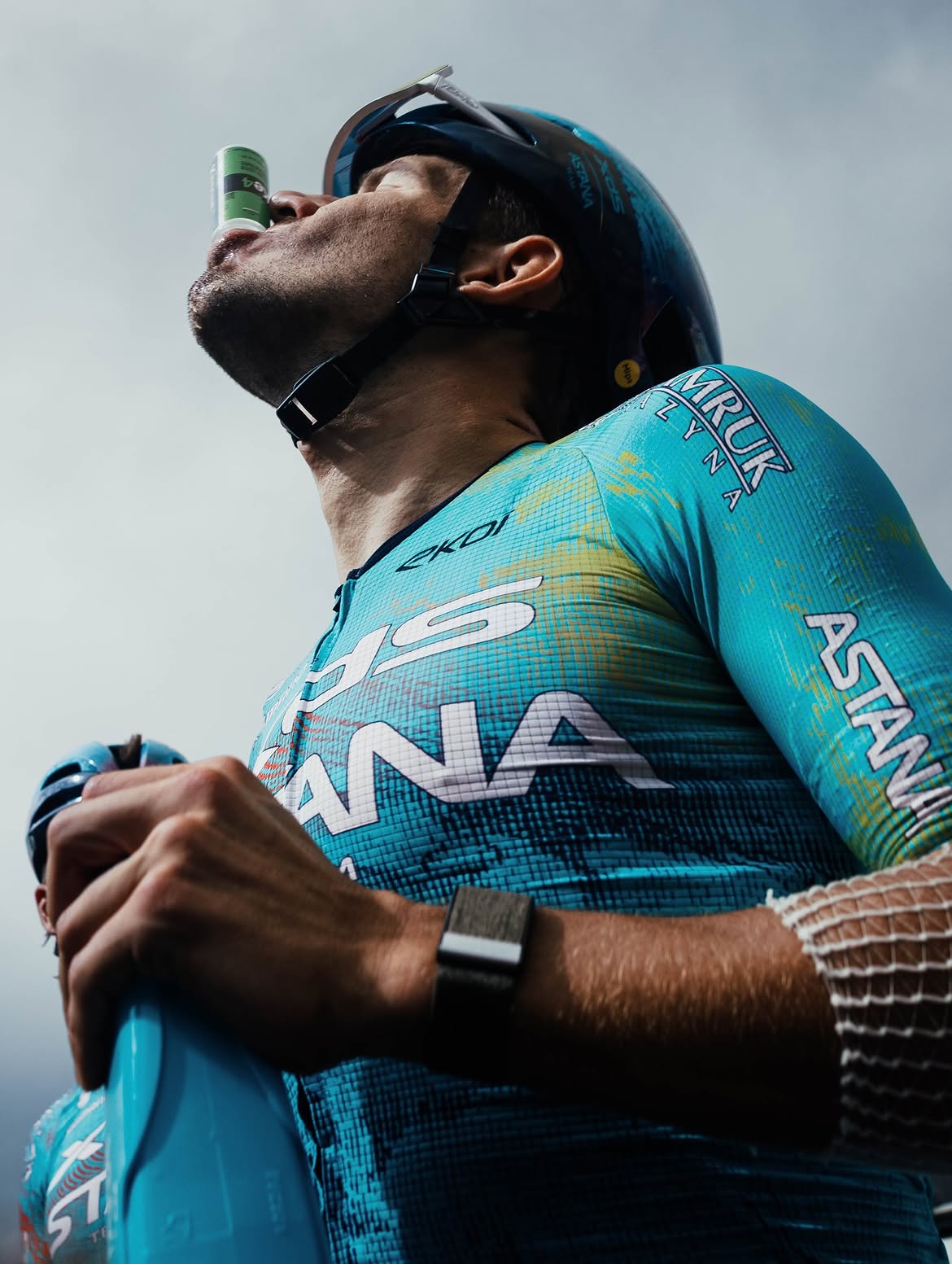
Yes. KetoneAid works with Soudal Quick-Step, the AG Insurance-Soudal Women's WorldTeam, XDS Astana, and from 2027 Soudal Safety Jogger, along with individual professional riders and coaches.
Soudal's own team content describes KetoneAid ketone ester as one component of a broader recovery strategy focused on repeating high-level performance.
Veech Ketone Ester is not prohibited under WADA rules, and selected KetoneAid products are independently batch tested for substances prohibited under anti-doping rules.
No product eliminates an athlete's individual anti-doping responsibility. Check current batch documentation for the specific product you intend to use.
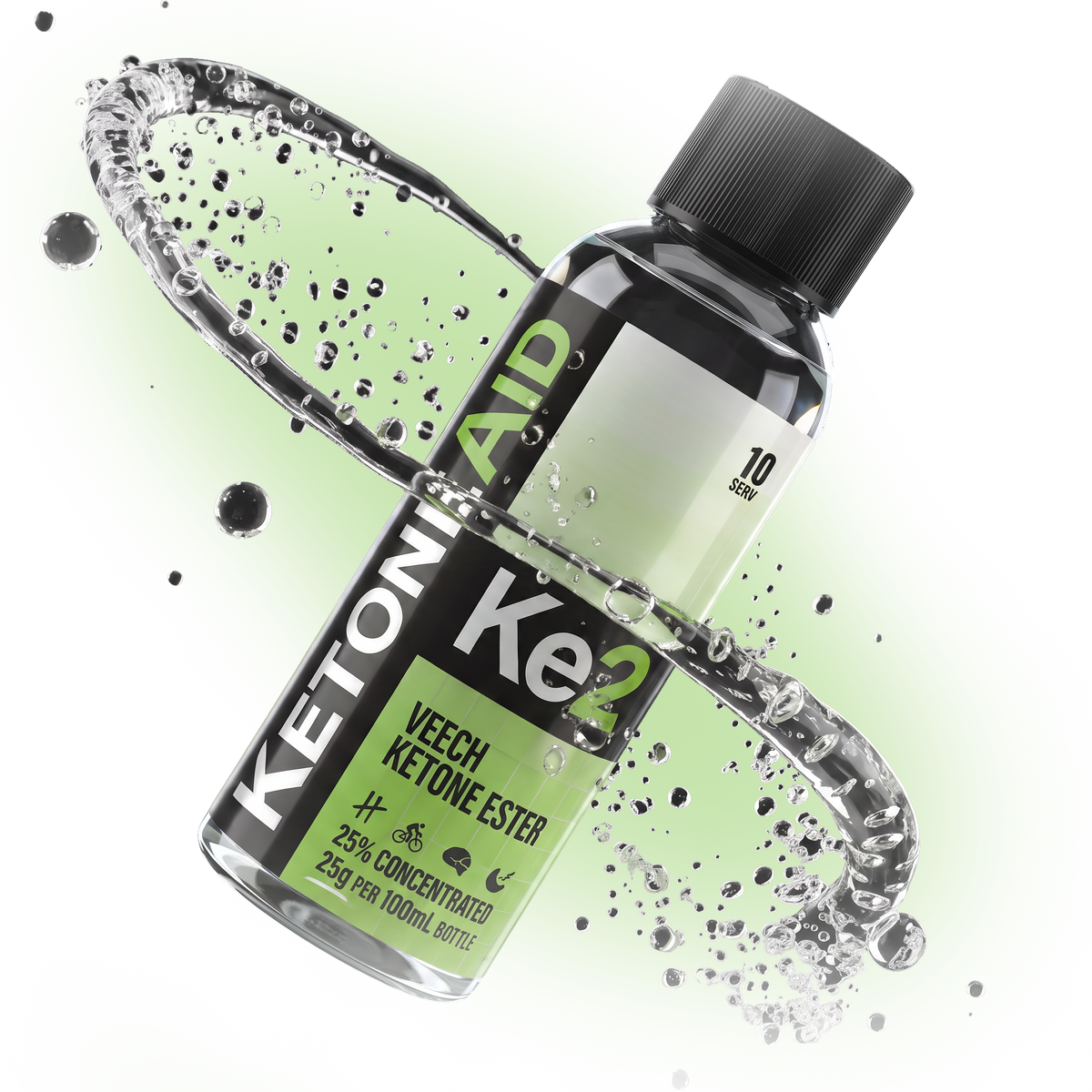
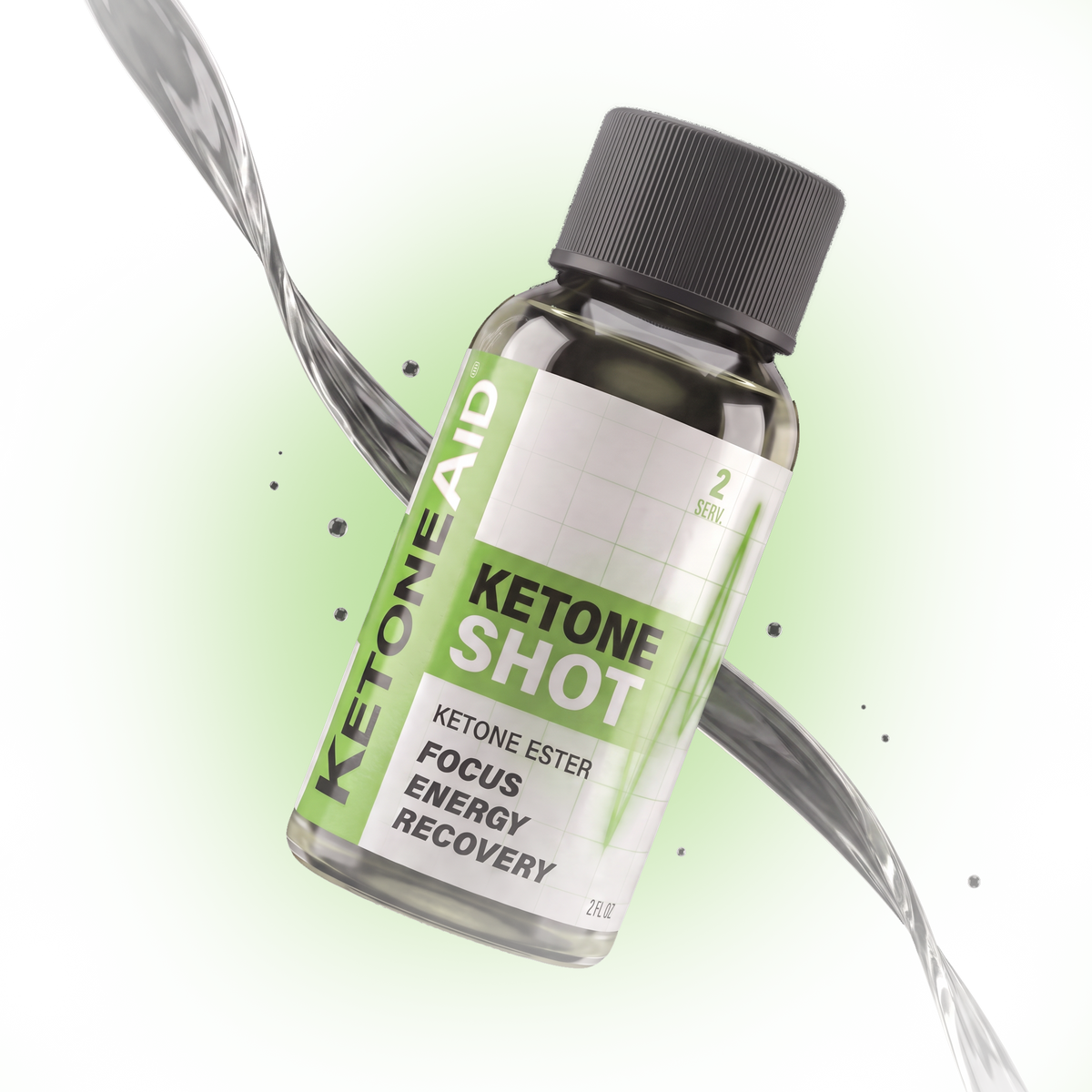
All three are the same Veech Ketone Ester at different dilutions, so the choice is about concentration, taste and how you want to dose.
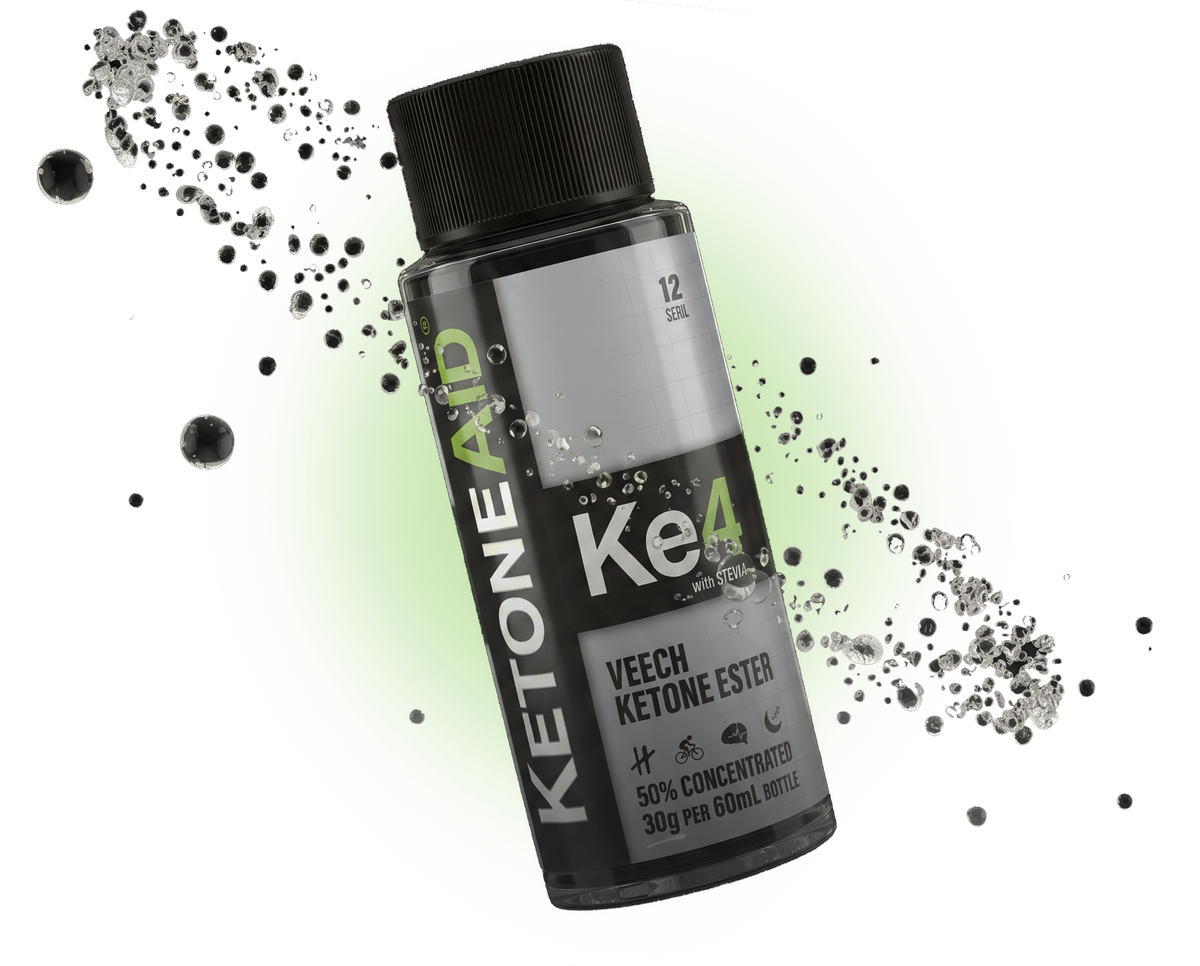
Ke4 is 50% and carries 30g per bottle — the most ester in the fewest bottles, and the most potent taste. Ke2 is 25% with 25g per bottle — the same Veech Ketone Ester, more diluted and easier to drink. The Ketone Shot is 8% with 5g per bottle, ready to drink with nothing to measure.
For a training block, most riders end up on Ke4 or Ke2 on cost per gram.
Veech Ketone Ester is a food. Nothing on this page is intended to diagnose, treat, cure or prevent any disease, and nothing here is medical advice. Research findings described here are measured outcomes from controlled trials in specific participant groups under specific protocols, not expected results for any individual. Bicarbonate co-ingestion has its own dosing and tolerance considerations and is not part of our standard recommendation. Comparison pricing is based on publicly listed figures at the time of writing. Our Veech Ketone Ester molecule is manufactured in the United States.